
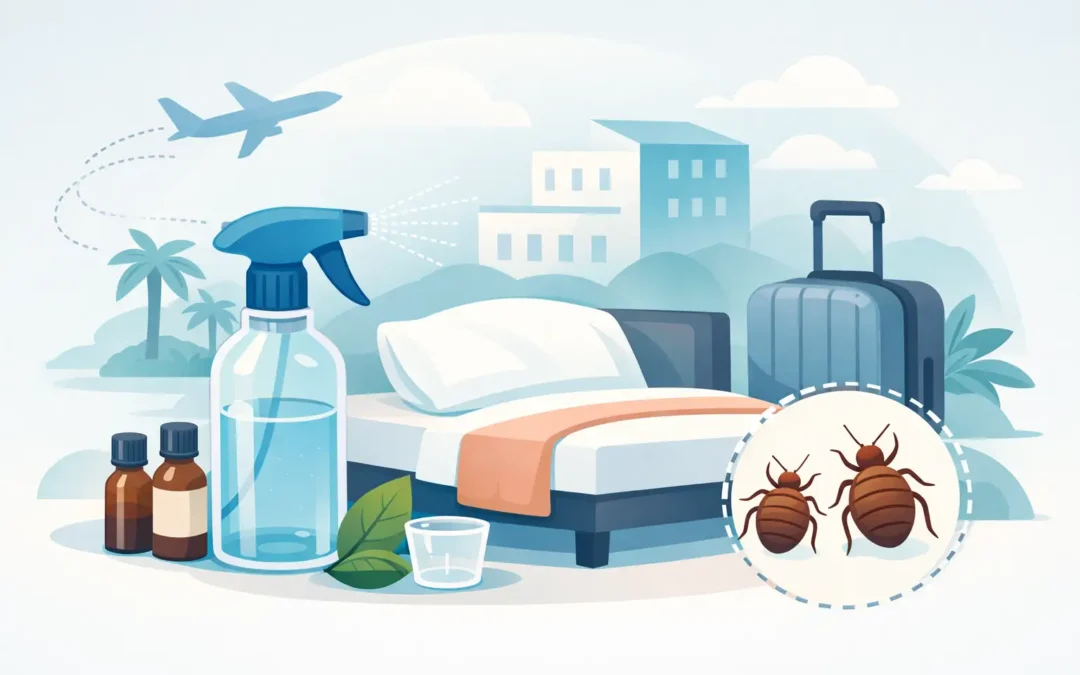
You do not want to figure out bed bug prevention after you unzip your suitcase at home. If you are looking for a diy bed bug spray for travel, the right mindset is simple – treat it as one layer of prevention, not a magic shield. A spray can help reduce risk on luggage surfaces and travel gear, but your real protection comes from inspection, smart packing, and what you do when you get back.
That matters because bed bugs are hitchhikers. They are not coming after your skin care products or your snacks. They are looking for cracks, seams, folds, and quiet places to hide long enough to get carried somewhere new. A homemade spray may make certain surfaces less inviting for a short period, but it will not kill every bug, it will not penetrate deep hiding spots, and it will not make a hotel room safe if you skip basic inspection.
What a DIY bed bug spray for travel can actually do
Let’s keep this honest. Most homemade travel sprays are based on strong scents, usually essential oils diluted in water or alcohol. Some people use tea tree, lavender, peppermint, eucalyptus, or cedar. The theory is that these smells may repel bed bugs for a limited time on exposed surfaces like the outside of a suitcase, a fabric packing cube, or a luggage stand.
What they do not do is replace a treatment product labeled for bed bugs. They are also not a reliable way to kill bed bugs or eggs. From a professional standpoint, that is the line people need to understand. Repellency is not the same thing as control. In some cases, a repellent effect can even push bugs to a different hiding place instead of solving the problem.
Still, if your goal is travel risk reduction and you use a homemade spray correctly, it can have a place. Think of it as a light deterrent for gear, not a room treatment.
A simple diy bed bug spray for travel recipe
If you want to make one, keep it basic and do not get creative with harsh ingredients. A practical mix is 1 cup of water, 1 tablespoon of witch hazel or rubbing alcohol, and 15 to 20 drops of one essential oil or a blend such as peppermint and lavender. Put it in a small spray bottle, shake before each use, and label it clearly.
I would not recommend loading up the bottle with heavy oil concentrations. More is not always better. Too much oil can stain fabrics, irritate skin, trigger breathing issues, and create problems if you are spraying in enclosed spaces. If you are traveling with kids, anyone sensitive to fragrance, or pets, that matters even more.
Before using it on luggage or clothing bags, test a small hidden area. Some fabrics and finishes do not react well to oils or alcohol. Hard-shell luggage is usually more forgiving than soft-sided luggage, but you still want to test first.
Where to use it and where not to
Use the spray lightly on the exterior of your suitcase, around seams, handles, zipper areas, packing cubes, and the luggage stand if you want an extra layer between your gear and the room. Let it dry before putting items away.
Do not spray bedding in a hotel, upholstered furniture, mattresses, electronics, or your own skin. Do not soak your luggage. Do not spray near open flame or heat sources if your recipe includes alcohol. And do not assume a room is clear just because you sprayed your bags.
That last point is the big one. Bed bugs are usually found near where people rest or sleep. If they are present, they are more likely to be in mattress seams, the headboard area, nearby furniture joints, or behind the bed than on the middle of the floor waiting for your suitcase.
The travel habits that matter more than the spray
If I had to choose between a homemade spray and good travel habits, I would take the habits every time. Start by keeping your luggage off the bed and off upholstered furniture. Use a luggage rack if it looks clean, and give it a quick visual check at the straps and joints before trusting it. If the rack looks questionable, use a hard bathroom surface instead.
Check the mattress seams, especially at the corners, and look at the headboard area if you can do it without taking anything apart. You are looking for live bugs, shed skins, tiny white eggs in protected seams, or dark spotting that looks like ink dots. None of that guarantees a room is infested, but enough of it should tell you not to settle in.
Keep clothing contained. Packing cubes or sealed bags are useful because they reduce loose fabric clutter and limit hiding places. Dirty clothes should stay separated from clean clothes. The more organized your packing system is, the easier it is to inspect and contain.
Why homemade sprays have real limits
A lot of DIY advice online makes bed bug prevention sound easier than it is. The reality is that bed bugs are built for hiding. Eggs are glued into protected areas. Nymphs are tiny. Adults can flatten into cracks you would miss on a casual glance. A spray that sits on outer surfaces for a few hours is not reaching those spaces.
There is also the issue of residue. Homemade sprays do not have the same tested residual profile as properly labeled pest control products. They evaporate, break down, and lose scent. So even if the smell seems strong to you, that does not mean it is doing useful work for very long.
That is why no-nonsense bed bug prevention always comes back to process. Spray if you want a minor deterrent on travel gear. Just do not confuse that with professional-level control.
What to do when you get home
This is where people either prevent a problem or carry one straight into the bedroom. Do not bring your suitcase in and unpack on the bed. Start in an area that is easier to clean, such as a garage, laundry room, mudroom, or hard-floor entry area.
Wash what can be washed, then dry on high heat when the fabric allows it. Heat is one of the few things that gives you a clear mechanical advantage over bed bugs. If an item cannot be washed, a thorough dryer cycle may still help depending on the item and manufacturer instructions.
Inspect the suitcase carefully, especially seams, zipper tracks, pockets, handles, and wheel housings. Vacuuming luggage can help remove debris and any hitchhikers, but pay attention to detail and empty the vacuum contents properly afterward. For extra caution, some travelers isolate luggage in a sealed container or bag for a period while they monitor it.
If you came back from a place where you strongly suspect exposure, step up your caution. A better response is not more homemade spray. It is tighter containment, hotter laundering where safe, and better inspection.
When travel prevention turns into a bigger problem
If you found a bug in your luggage, woke up with bites after a trip, or are seeing signs at home after travel, stop thinking in terms of a travel spray. At that point, you are moving from prevention into possible infestation management, and the approach has to change.
That means inspection, monitoring, and a complete treatment plan if activity is confirmed. Spraying random homemade mixtures around the house is not a plan. It can waste time, scatter bugs, and give you false confidence while the population grows. Bed bug control works when it is systematic – identification, preparation, targeted product use, follow-up, and safety from start to finish.
That is the gap a lot of people run into. They are willing to do the work themselves, but they have never been shown how a professional thinks through the job. That is exactly why structured DIY guidance matters. Butchies Bed Bug Bureau is built around that idea – giving regular people a professional framework instead of internet guesswork.
The best use for a travel spray
If you still want a diy bed bug spray for travel, use it with realistic expectations. Spray the outside of your luggage lightly. Let it dry. Keep your bags off beds and upholstered chairs. Inspect the room before you unpack. Contain your clothing. And when you get home, process everything like exposure is possible, not impossible.
That approach is less exciting than miracle claims, but it is a whole lot more useful. Bed bug prevention is rarely about one product or one trick. It is about stacking small smart decisions so one bad hotel room does not turn into a home problem.
Recent Comments