
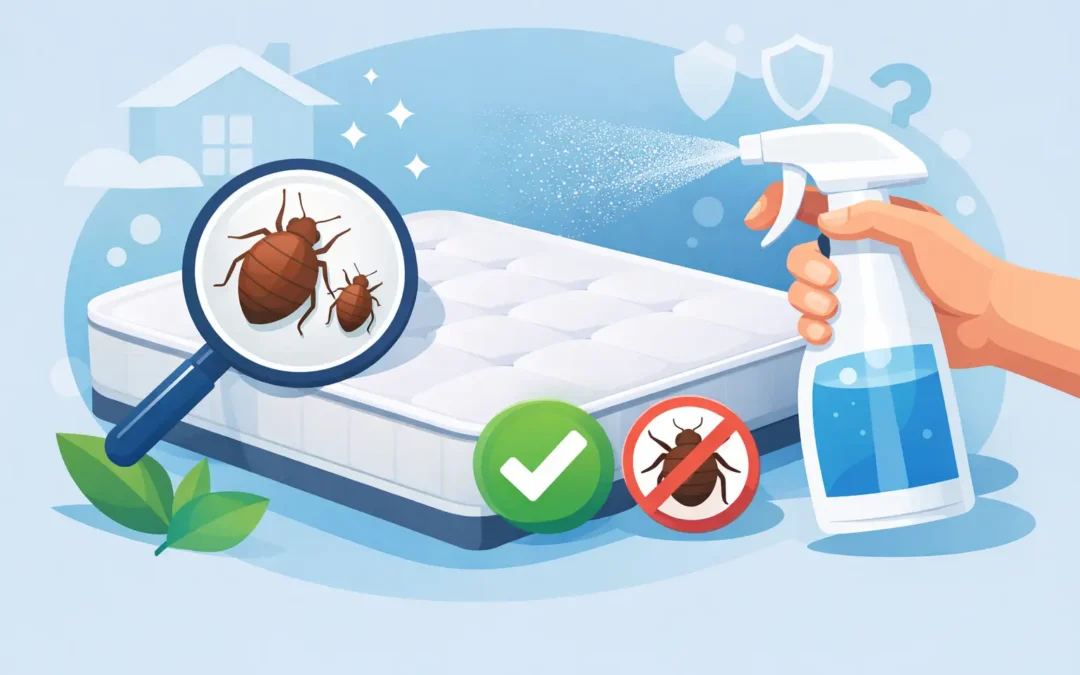
If you found bites, black spotting, or live bugs around the seams of your bed, I understand why a diy bed bug spray for mattress treatment sounds like the fastest fix. The problem is that mattresses are one of the worst places to wing it. You are dealing with an insect that hides deep in seams, tufts, labels, bed frames, and nearby cracks, and you are also treating the surface where people sleep. That means your spray choice has to make sense for both effectiveness and safety.
The truth about DIY bed bug spray for mattress use
Here is the straight answer. Most homemade bed bug sprays are weak, short-lived, or unsafe for mattress use. Some may kill a bug if you hit it directly. Very few will control an infestation. Bed bugs are not like ants wandering across a kitchen floor. They spend most of their time hidden, and eggs are especially hard to kill with casual spray methods.
A lot of online recipes rely on essential oils, alcohol, vinegar, or random cleaning products. Those mixes get passed around because they sound simple and cheap. What usually gets left out is that contact kill is not the same as control. If you spray a visible bug and it dies, that does not mean you solved the problem in the seams, the box spring, the frame joints, the baseboards, and the nearby furniture.
The other issue is mattress safety. People sleep there for hours, children may sit or nap there, and bedding stays in direct contact with skin. A treatment that seems harmless because it came from a kitchen cabinet can still be irritating, flammable, or simply not labeled for that kind of use.
What homemade sprays usually contain
Most DIY recipes fall into a few categories. They use rubbing alcohol, vinegar, essential oils, dish soap, or combinations of those ingredients. Each one has limitations.
Rubbing alcohol can kill some bed bugs on direct contact, but it evaporates fast and has no residual effect. It also creates a real fire hazard. That is not a small concern. People have caused fires trying to treat beds and furniture with alcohol spray.
Vinegar gets talked about a lot, but bed bugs are not impressed by it. It does not provide dependable control, and it will not reach hidden bugs or eggs in any meaningful way.
Essential oils are popular because they smell better than insecticides, but smell is not treatment. Some oils may irritate or repel bugs briefly, and some may kill on direct contact at certain concentrations, but they do not give you the kind of consistent result you need in an active infestation. They can also irritate skin, trigger breathing issues, or stain fabrics.
Soap-and-water mixtures are mostly cleaning solutions, not bed bug control tools. They may affect an exposed bug if drenched, but that is not a real treatment strategy.
Why mattresses are tricky to treat
A mattress is not just a flat sleeping surface. It has piping, seams, tufts, labels, handles, and internal folds where bed bugs hide. If the infestation has been active for a while, bugs may also be in the box spring, bed frame, headboard, nightstands, and along the room perimeter.
That matters because people often focus too hard on the mattress itself. They spray the top, maybe the sides, and assume the problem is handled. Meanwhile the bugs are living in protected cracks a few inches away and returning to feed at night. If your mattress treatment is not part of a broader plan, you are usually just chasing activity, not stopping it.
Safer and smarter than a homemade spray
If you are trying to solve this yourself, the better question is not how to make a diy bed bug spray for mattress treatment. The better question is how to treat a mattress correctly within a complete bed bug program.
Start with inspection. Strip the bed and check the mattress seams, piping, and labels. Then inspect the box spring, frame joints, headboard, and nearby furniture. Look for live bugs, shed skins, fecal spotting, and eggs. You need to know whether the mattress is the main harboring area or just one piece of the problem.
Next, reduce the population with physical methods. A strong vacuum with a crevice tool can remove visible bugs and debris from seams and edges. You are not going to vacuum away the infestation, but it helps. Steam can also be useful when applied correctly because lethal heat works on bugs and eggs. The catch is technique. Too fast and you do not deliver enough heat. Too much moisture and you create other problems. Steam is a tool, not magic.
After that, mattress encasements make a lot of sense. A good bed bug encasement traps any bugs already inside and makes future inspections easier. It also removes many of the mattress hiding spots that make treatment harder. That is one of the best non-chemical steps a DIYer can take.
If you use a spray, label matters
For mattress treatment, professional thinking starts with the label. If a product is not labeled for mattresses or sleeping surfaces, do not improvise. Just because something kills insects does not mean it belongs where people sleep.
There are insecticide products specifically labeled for bed bugs and, in some cases, for limited mattress application. Even then, the label usually restricts where and how you apply it. Often that means seams, tufts, folds, and edges only, not broad saturation across the sleeping surface. You also need to follow drying times and reentry instructions exactly.
This is where many DIY attempts go off the rails. People either underapply and get no result, or they overapply and create a safety issue. More chemical is not better. Correct chemical in the correct place, as the label directs, is what matters.
What actually works better than homemade mixes
A reliable bed bug plan usually combines several methods. Inspection, vacuuming, steaming where appropriate, encasing the mattress, reducing clutter, laundering and drying items on high heat, and using properly labeled products in the right locations all work together.
Residual products have a role, but they should target bed bug travel routes and harborages, not just the top of the mattress. Dusts may be useful in voids and protected areas when used correctly. Interceptors under bed legs can help monitor activity and reduce bites. None of that is flashy, but this is how control is built.
If that sounds more involved than spraying a homemade bottle mix, that is because bed bug work is process-driven. The bugs exploit shortcuts. When people skip inspection, skip prep, or treat only what they can see, the infestation keeps rolling.
Common mistakes with mattress spraying
One mistake is soaking the mattress. That does not improve control, and it can leave you with chemical exposure concerns or moisture issues.
Another is using products not meant for indoor bed bug treatment. Outdoor bug sprays, foggers, disinfectants, and cleaning solutions are not substitutes for a labeled bed bug product.
A third mistake is treating only once. Bed bug control nearly always requires follow-up because eggs may hatch after the first round, and hidden areas may not have been fully addressed on day one.
And then there is the classic trap: focusing on the mattress while ignoring the bed frame and box spring. In many infestations, those areas matter just as much, sometimes more.
When a DIY bed bug spray for mattress might have a role
If by DIY you mean you are doing the work yourself, not mixing random ingredients in a spray bottle, then yes, a mattress spray can have a role. It can be one part of a structured self-treatment plan if the product is specifically labeled for bed bugs and for that type of application, and if you use it exactly as directed.
That is a big difference from homemade spray recipes. One approach is built on tested instructions and legal labeling. The other is mostly internet folklore.
If you are pregnant, have infants in the home, have respiratory sensitivities, or simply are not sure what is safe to apply around sleeping areas, slow down and verify every product decision. There is no prize for speed if the method is wrong.
The practical standard to aim for
Think like a pro, even if you are doing this yourself. Inspect first. Confirm where the bugs are actually harboring. Use physical removal methods to knock down activity. Encase the mattress. Launder and dry bedding properly. Then use labeled bed bug products only where they belong and only according to the label. Reinspect and repeat the plan as needed.
That is not glamorous advice, but it is honest advice. Bed bugs are controlled by disciplined treatment, not clever spray recipes.
If you want the cheapest possible solution, homemade mattress spray is tempting. If you want the best chance of actually fixing the problem, use methods that match how bed bugs live and hide. That is the shift that saves people the most time, money, and frustration in the long run.
Recent Comments