
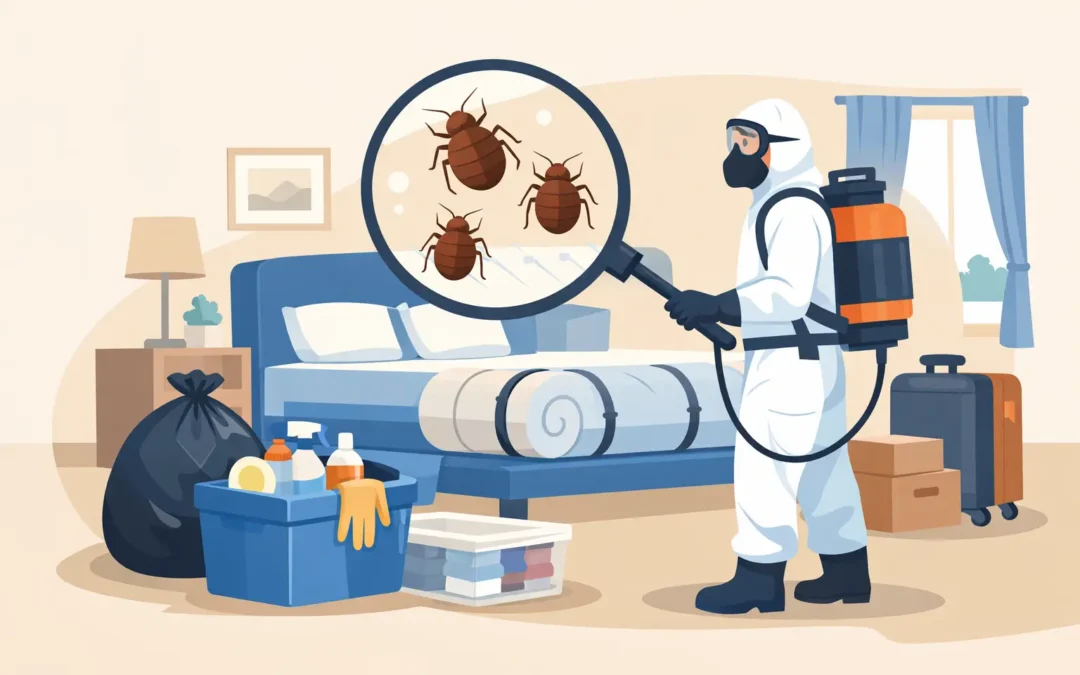
When a bed bug treatment is scheduled, most people focus on the exterminator and the products. Fair enough. But the truth is, preparation is what often decides whether the job goes smoothly or turns into a repeat problem. If you are wondering how to prepare for exterminator for bed bugs, start with this: your goal is to expose hiding spots, reduce clutter, and keep bed bugs from hitchhiking into clean areas.
That sounds simple, but this is where people make expensive mistakes. They throw belongings all over the place, move infested items through the home uncovered, or start spraying random products before treatment day. Good preparation is not about doing more. It is about doing the right things in the right order.
How to prepare for exterminator for bed bugs without making the problem worse
Bed bugs thrive in tight, protected spaces close to where people rest. That means your bed, upholstered furniture, baseboards, nightstands, laundry piles, and stored clutter all matter. The exterminator needs access to those areas. If the room is packed, if clothes are scattered, or if furniture is pressed tightly against the wall, treatment gets harder and less precise.
Your first job is to stop the infestation from spreading during prep. Do not carry loose blankets, clothes, pillows, or stuffed items from room to room. Bag them before moving them. Do not put unbagged laundry baskets in hallways or dump bedroom contents into living areas. That is one of the fastest ways to turn one infested room into three.
If your pest control company gave you a prep sheet, follow that first. Different treatment methods can require different prep standards. A conventional residual treatment, a steam-focused service, and a whole-unit heat treatment are not prepared the same way. That is not a contradiction. It is just how bed bug work goes. The method matters.
Start with a clear treatment plan
Before you touch anything, confirm what kind of service is being performed. Ask whether it is chemical treatment, heat treatment, steam, dust application, or a combination. Ask what rooms are being treated, what needs to be laundered, whether mattress encasements are recommended, and when you can re-enter treated areas.
This step matters because bad prep sometimes comes from guessing. For example, some people bag and seal nearly everything, only to learn the exterminator needed more items left accessible for inspection and treatment. Others strip beds and dismantle furniture that was supposed to remain in place. Professional prep is not random cleaning. It is preparation tied to a treatment process.
If you are handling bed bug work on your own and following a professional-style system, the same rule applies. Build the treatment plan first, then prep to support it. That is one reason structured education matters. It keeps you from doing busywork that wastes time and spreads bugs.
Declutter, but do it carefully
Clutter gives bed bugs extra harborage. It also blocks inspection and treatment. So yes, you need to reduce it. But do not go on a panic-cleaning spree.
Start by separating true trash from items you are keeping. Trash should go into heavy-duty bags, sealed before it leaves the room. If the item is heavily infested and meant for disposal, it may need to be damaged or clearly marked so nobody brings it back inside. Local rules on furniture disposal vary, so use common sense and check your area if needed.
Items you are keeping should be bagged or binned in a way that prevents bed bugs from escaping. Clean items should be separated from potentially infested items. That distinction matters. If you wash and dry clothing properly, then toss it back onto an infested chair, you just erased your own progress.
Try to keep categories organized. Clothing with clothing. Bedding with bedding. Shoes with shoes. Random mixed bags become a problem later because you will not know what was treated, what was inspected, and what may still be infested.
Laundry is part of prep, not a side task
For most bed bug jobs, laundering is one of the most important preparation steps. Bedding, clothing, washable curtains, and similar fabric items often need to be run through the dryer on sufficient heat. Washing helps clean items, but heat is what kills bed bugs and eggs.
Bag items in the room before moving them to the laundry area. After drying, place them into fresh clean bags and seal them. Do not return those items to untreated furniture or floors. Keep them protected until the exterminator tells you it is okay to put them back.
Not everything needs to be washed. In many cases, dryer-only treatment is enough for dry, clean fabrics. That can save time and cut down on unnecessary handling. On the other hand, delicate items, shoes, backpacks, and non-washables may need a different plan. Some can be treated with heat chambers or isolated according to a treatment timeline. Some should simply stay bagged until the larger job is under control.
Prepare the bed and nearby furniture
The bed is usually the center of the work, because that is where people sleep and where bed bugs often concentrate. Strip the bed if your treatment instructions call for it, and bag all linens before moving them. Pull the bed slightly away from the wall if instructed. Give the exterminator access to the headboard, bed frame, mattress seams, box spring, and the floor around the bed.
Nightstands should be emptied if required, especially if they are packed with books, chargers, paper, or clothing. Drawers may need to be removed or left open for inspection. Upholstered furniture near sleeping areas often needs similar attention.
Do not start throwing mattresses out unless a professional-style plan actually calls for it. Most mattresses do not need to be discarded just because bed bugs were found. In many cases, they can be treated and then protected with the correct encasement. Throwing beds out too quickly often creates more movement, more spread, and more cost.
Vacuuming can help, but only if you do it right
Vacuuming is useful for removing visible bed bugs, cast skins, and debris before treatment. It is not a complete solution by itself, and it does not replace pesticide, steam, or other control measures. Still, done properly, it helps the overall job.
Focus on mattress seams, box spring edges, bed frames, cracks, tufts, furniture joints, baseboards, and the edges of carpeting near sleeping areas. After vacuuming, the contents need to be sealed and disposed of carefully. If your vacuum uses a bag, remove and seal it. If it is bagless, empty the canister into a sealed trash bag and clean the vacuum according to the manufacturer instructions. Otherwise, you risk keeping live bugs in the machine.
What not to do before treatment
This part is just as important as the prep itself. Do not spray store-bought bug killers all over the room right before the exterminator arrives. That can scatter bed bugs deeper into hiding and interfere with professional products. Do not use foggers or bug bombs. They are a bad fit for bed bugs and often make the job harder.
Do not move infested furniture into shared spaces, hallways, garages, or another bedroom. Do not let kids drag bedding around the house. Do not sleep in a different room unless your treatment plan specifically calls for it. Bed bugs follow the host. If you suddenly start sleeping on the couch, you may expand the infestation instead of containing it.
Safety, pets, and realistic expectations
If children, pets, fish tanks, or people with health sensitivities live in the home, ask for exact treatment-day instructions ahead of time. Re-entry times matter. So does whether food items, pet bowls, or toys need to be removed or covered.
Also, understand that one treatment does not always mean instant elimination. Bed bug control usually takes follow-up, monitoring, and discipline after the initial service. Preparation improves the odds, but it is not magic. Neither is the treatment itself. Success comes from a complete process done correctly.
That is why the best prep is calm, organized, and methodical. You are not trying to win a cleaning contest. You are setting the room up so the treatment can reach the places bed bugs actually live. If you keep that in mind, you will make better decisions and avoid the kind of panic moves that drag this problem out longer than it needs to last.
Recent Comments