
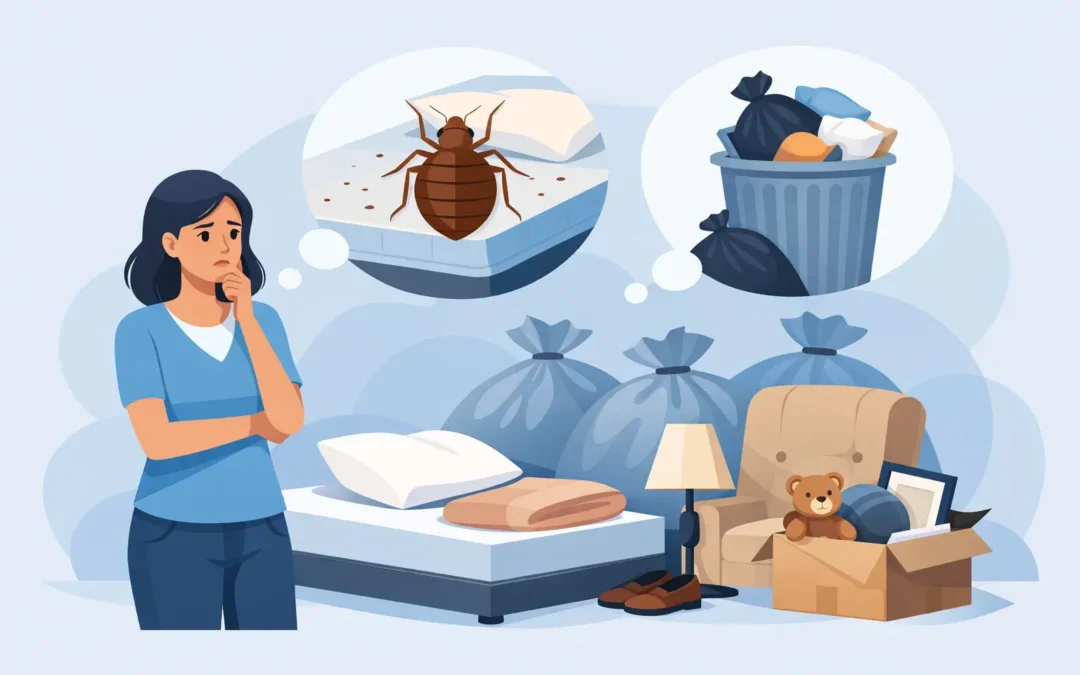
Panic makes people do expensive things fast. One of the most common is filling trash bags with clothes, mattresses, toys, and furniture because they think bed bugs mean total loss. So, do you have to throw everything away with bed bugs? In most cases, no. Most belongings can be treated, cleaned, isolated, or inspected. Throwing items out is usually a last resort, not the first move.
That matters because random disposal often makes the problem worse. People drag infested items through the home, spread bugs into hallways, replace furniture too soon, and spend money they did not need to spend. The better approach is professional-style decision-making – figure out what is actually infested, what can be treated, and what truly is not worth saving.
Do you have to throw everything away with bed bugs? Usually not
Bed bugs do not ruin most items in the same way water, mold, or fire does. They hide in cracks, seams, folds, clutter, and fabric. They are a treatment problem, not usually a property-destruction problem. If an item can be heated, dried, steamed correctly, inspected thoroughly, isolated, or treated with the right process, it often can be kept.
What drives disposal is not just whether a bug touched it. The real questions are whether the item can be treated safely, whether it has too many inaccessible hiding spots, whether the cost and labor make sense, and whether keeping it creates a risk of ongoing harborage. That is a very different standard from throwing things away just because they are in the same room.
What you can usually keep
Clothing, bedding, towels, and many washable fabrics are almost always worth keeping. These items are typically some of the easiest to deal with because laundering and especially dryer heat are effective tools when used properly. Shoes, backpacks, stuffed items, and small soft goods may also be salvageable depending on the material and whether they can go through heat treatment methods safely.
Hard items are often very keepable too. Dressers, nightstands, lamps, electronics, plastic bins, books, picture frames, and similar possessions are not automatically trash. They need inspection and, where appropriate, treatment or containment. Bed bugs like tight hidden spaces, so some objects require more patience than others, but that is not the same as saying they are unsalvageable.
Mattresses and box springs are where people panic fastest. Sometimes they can be kept, especially if they are structurally sound and you can treat them properly and encase them. Sometimes disposal makes sense if the condition is poor, the cover is torn badly, or the internal structure gives bed bugs too many protected hiding areas. There is no honest one-size-fits-all answer there.
What items are harder to save
The worst candidates are heavily cluttered, damaged, or porous items with lots of deep cracks, tears, layers, or inaccessible voids. Think broken recliners, ripped upholstered furniture, heavily infested wicker, or cheap furniture that is already near the end of its life. Those pieces can sometimes be treated, but the labor can exceed the value.
Furniture with mechanical parts is another gray area. Recliners, sleeper sofas, and adjustable bed frames have folds, hollow spaces, and moving parts that create excellent hiding spots. These are not automatic throwaways, but they are more difficult than a plain wood chair or a simple metal frame.
The issue is not sentiment versus no sentiment. It is whether the item can be treated thoroughly enough to stop it from acting as a protected bed bug harbor.
When throwing something away does make sense
Disposal is reasonable when an item cannot be treated safely, cannot be inspected well enough, or is so infested and low-value that the time and cost are not justified. If a mattress is ripped open, a recliner is full of inaccessible voids, or a piece of furniture is already broken down, tossing it may be the cleaner decision.
You should also consider disposal if keeping the item will interfere with the larger treatment plan. One bad harbor can keep reintroducing bugs and drag out the entire process. A stubborn item that cannot be treated well is sometimes the weak link.
If you do discard something, do it carefully. Do not move it through the home uncovered. Bag or wrap it when possible, label it as bed bug infested if appropriate, and follow local disposal rules. The goal is to avoid spreading bugs to other rooms, shared spaces, or other people.
How to decide what stays and what goes
Start by sorting items into practical categories: washable, dryable, inspectable hard goods, treatable furniture, and questionable high-risk items. This keeps you from making emotional decisions room by room.
Ask four simple questions about each item. Can I inspect it well? Can I treat it safely? Does it have too many hiding places? Is it worth the labor compared with replacement? That framework works better than guessing.
A cheap, torn upholstered chair with deep seams and heavy bug activity may not be worth saving. A wood nightstand with a few removable drawers probably is. A bag of clothes is almost certainly keepable. A heavily damaged box spring may not be.
Clothes, bedding, and linens
These are usually the easiest category. The mistake people make is bagging them and leaving them untreated, or washing on cold and assuming that solved it. In practice, heat is the key part. Items need to go through an effective dryer cycle based on material tolerance and load size, then be stored in clean sealed bags or bins so they do not get re-exposed.
Clean and dirty laundry both matter. Bed bugs do not care whether fabric was washed yesterday. They care whether it gives them a place to hide. Once textiles are properly processed, keep them separated from untreated items.
Furniture and mattresses
Beds should be reduced to their simplest form for inspection. Seams, tufts, screw holes, joints, slats, headboards, and the underside all matter. A plain metal bed frame is usually easier to deal with than padded furniture or ornate wood construction with lots of cracks.
If you keep a mattress or box spring, it needs to fit into a real treatment plan. That can include detailed inspection, targeted treatment where appropriate, and quality encasements when suitable. Encasements do not replace treatment, but they can help trap undetected bugs inside and reduce future hiding spots on the exterior.
Do not throw away your bed just because bugs were found there. Bed bugs live near where people rest. That is expected. Replacing the bed before the infestation is under control often leads to the new bed getting infested too.
Electronics, books, and personal items
These items scare people because they are harder to wash and people worry about damage. Most do not need to be thrown away. They need a controlled approach.
Electronics should be inspected carefully, especially around vents, seams, screw points, and cases stored near sleeping areas. Books, papers, and decorative items may need isolation, careful inspection, or treatment methods that fit the material. The worst thing you can do is move them from room to room without a plan.
This is where discipline matters more than force. Bed bug control is rarely about doing the most dramatic thing. It is about doing the correct thing all the way through.
The biggest mistake: replacing items too early
A lot of people throw things out because they want a fresh start. I understand that. But if the infestation is still active, new furniture just gives bed bugs new places to live. Disposal without a complete treatment strategy is often expensive theater.
Professional pest control thinking is different. First contain spread, then reduce harborage, then treat correctly, then monitor, then decide whether any remaining item truly needs to go. That order saves money and cuts down on repeat problems.
If you are on a tight budget
Good news – not throwing everything away is usually the budget-friendly path and the smarter one. Focus your money on the parts that actually move the outcome: proper preparation, the right treatment methods, careful inspection, and follow-up. Random replacement burns cash fast and often does not solve the infestation.
If you are doing this yourself, be realistic. Some items are easy to save, some are labor-intensive, and some are not worth the effort. There is no shame in discarding a hard-to-treat low-value item. The mistake is assuming every item must go.
At Butchies Bed Bug Bureau, that is exactly how we teach people to think – not with panic, but with a structured treatment mindset based on what can be cleaned, treated, isolated, and monitored safely.
The main thing to remember is simple: bed bugs call for a plan, not a purge. Before you drag another bag to the curb, stop and decide whether that item is truly unsalvageable or whether it just needs the right treatment process.
Recent Comments