
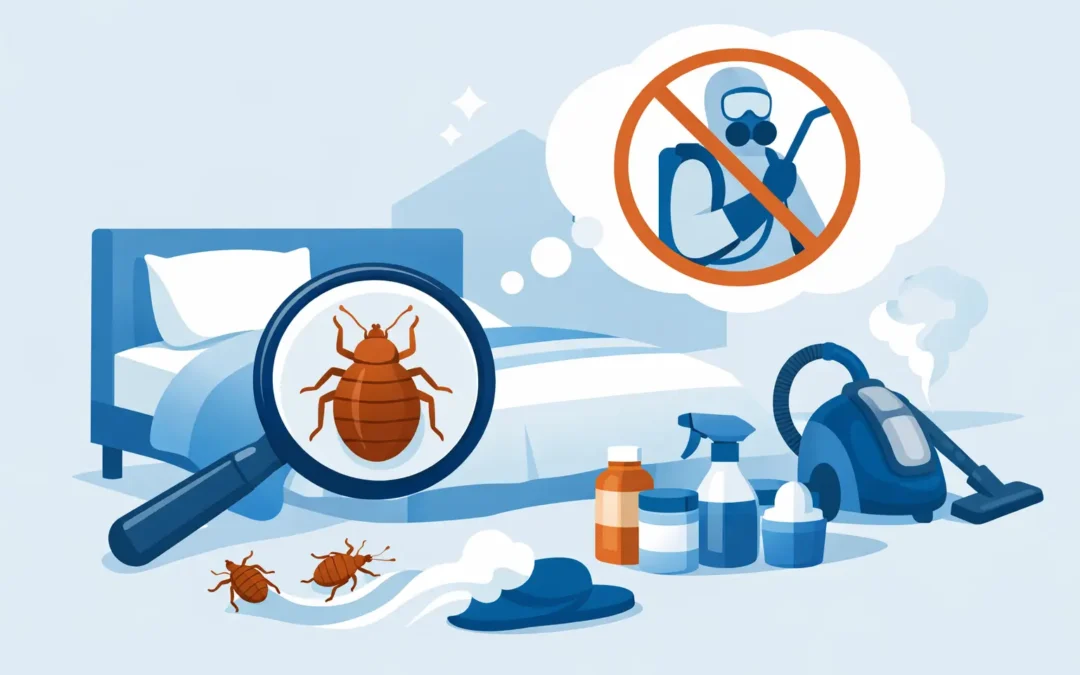
If you woke up with bites, found black spotting on the mattress seam, or saw a flat brown bug run for cover, you are probably asking the same thing most people ask first: can you get rid of bed bugs without an exterminator? The honest answer is yes, sometimes. But not by spraying a random can from the hardware store and hoping for the best. Bed bugs are beatable without in-person pest control, but only if you use a full treatment process that handles inspection, prep, application, monitoring, and repeat work.
That is the part most DIY advice skips. People are told to wash bedding, vacuum, maybe buy a fogger, and call it a day. That is not a professional process. Bed bugs survive partial treatment all the time, and when they do, they spread, regroup, and keep feeding.
Can you get rid of bed bugs without an exterminator if you do it yourself?
Yes – if the infestation is still manageable, you can follow directions carefully, and you are willing to be thorough for several weeks. No – if you expect a one-day fix, do not want to move furniture, will not follow product labels, or cannot keep up with follow-up inspections. DIY bed bug control works when it is treated like a system, not a shortcut.
A small to moderate infestation in one or two rooms is usually far more realistic for self-treatment than a heavy, long-running infestation throughout a home or apartment. Clutter level matters too. So does whether you live in a single-family home or share walls with neighbors. In apartments, townhomes, and duplexes, reinfestation from an adjacent unit can make even a strong treatment plan harder to finish successfully.
The key point is simple: the question is not just can you get rid of bed bugs without an exterminator. The better question is whether you can do the same things a good exterminator would do, with the same discipline.
What actually gets rid of bed bugs
Professional bed bug work is not magic. It is inspection, targeted treatment, and repeat service. Bed bugs hide close to where people rest, but they do not stay only on the mattress. They get into bed frames, headboards, baseboards, couches, nightstands, recliners, picture frames, and cracks near sleeping or sitting areas. If you treat only the bed, you leave a lot of the infestation behind.
A working plan usually includes laundering and high heat drying of fabrics, reducing clutter, vacuuming visible bugs and debris, encasing mattresses if appropriate, and applying the right products to the right places. It also includes avoiding mistakes that make the problem worse, like overapplying pesticides, treating clothing drawers carelessly, or using total-release foggers. Foggers are one of the biggest DIY mistakes because they do not reach hidden harborages well and can scatter bugs deeper into the structure.
Heat helps, but household heat alone is limited. A dryer on high heat is excellent for clothing, bedding, and soft items that can handle it. A space heater in the middle of a room is not a bed bug heat treatment. Real structural heat is controlled, measured, and professionally managed.
Why most DIY bed bug jobs fail
Most failures come from missing hiding spots, using the wrong products, or stopping too early. Bed bugs are good at surviving partial pressure. If you kill the easy ones and ignore the hidden ones, you did not solve the problem. You just thinned it out.
Preparation is another common failure point. If the room is cluttered, if clean and infested items are mixed together, or if furniture is never pulled apart and inspected, treatment quality drops fast. People also tend to overfocus on bites. Bites do not tell you where the bugs are. Bed bugs can feed in one place and hide in another nearby crack or joint.
Then there is follow-up. Bed bug eggs are part of the reason this takes time. Even a very good initial treatment usually needs repeat inspection and additional treatment on a schedule. If you quit because you do not see bugs for a few days, you can easily lose ground.
A realistic DIY process that can work
Start with inspection. You need to identify where people sleep or spend long periods sitting, then inspect outward from those areas. Check mattress seams, box springs, bed frame joints, headboards, nightstands, upholstered furniture, curtains near the bed, baseboards, and nearby wall hangings. Look for live bugs, cast skins, fecal spotting, eggs, and clustered harborages.
Next comes containment and prep. Bedding, clothing, and washable fabrics from affected rooms should be bagged, moved carefully, laundered, and dried on high heat long enough to kill all life stages. Once items are clean, keep them isolated so they do not get re-exposed. Clutter needs to be reduced, but not by carrying loose items all over the house. Bed bugs spread when people panic and move infested belongings carelessly.
After that, vacuum visible insects and debris from seams, tufts, edges, and cracks. Vacuuming alone will not eliminate an infestation, but it helps reduce numbers and improves treatment quality. Dispose of vacuum contents carefully.
Then comes product application, and this is where DIY usually goes off track. Bed bug work is about using labeled products in the correct locations, in the right amounts, with attention to where people contact surfaces. Some products are designed for cracks and crevices. Some can be used on certain furniture components. Some are not for mattresses or seating surfaces at all. Label directions are not optional. More chemical does not mean better control. It often means more risk and worse results.
Dust formulations can be useful in protected voids and inaccessible harborages, but only in very light, proper amounts. Liquid residuals may be appropriate for selected cracks, joints, and bed components depending on the label. Contact sprays can kill exposed bugs, but they are not a complete plan. If you rely only on contact kill, you will miss too many hidden bugs.
Monitoring matters too. Interceptors and routine visual checks help you measure whether activity is dropping, staying level, or shifting. Good monitoring also helps prevent guesswork. You want evidence, not hope.
Can you get rid of bed bugs without an exterminator in an apartment?
You can, but apartments are more complicated. Shared walls, neighboring units, and building policies all matter. If bugs are moving between units, your treatment may be solid and still not hold. In a rental, you also need to know what your lease and local laws say about reporting infestations and treatment responsibility.
If you are in a multi-unit building, communication is part of the treatment plan whether you like it or not. A quiet, isolated infestation is one thing. A building-level problem is another.
When self-treatment is a bad idea
DIY is not the right call for every situation. If the infestation is heavy across multiple rooms, if someone in the home cannot safely tolerate pesticides, if you are dealing with severe clutter that blocks access, or if you are not physically able to do the prep and follow-up, you may need in-person help.
The same goes if you have already tried several products with no structure and the infestation has been active for months. By that point, many people have made the bugs harder to track by scattering them. It is still possible to recover, but the plan needs to get much tighter.
There is also a difference between wanting to save money and wanting to cut corners. Those are not the same thing. A lower-cost approach can work. A sloppy approach usually does not.
What gives you the best chance of success
The people who beat bed bugs on their own usually do three things right. First, they follow a professional-style system instead of collecting random tips. Second, they treat preparation as part of the extermination, not as busywork. Third, they stay with the process long enough to confirm the infestation is actually gone.
That is why guided self-treatment can make sense. You do not necessarily need someone standing in your bedroom with a sprayer if you have solid instruction on what to inspect, how to prepare, what products fit the job, where to apply them, and how to do follow-up safely. That is a very different path from guessing your way through videos and forum posts.
At Butchies Bed Bug Bureau, that is exactly the gap we focus on – giving people the professional framework to do this correctly themselves.
If you are serious about handling the problem without hiring an exterminator, be serious about the process. Bed bugs do not care about good intentions. They respond to thorough inspection, correct treatment, and disciplined follow-up.
Recent Comments