
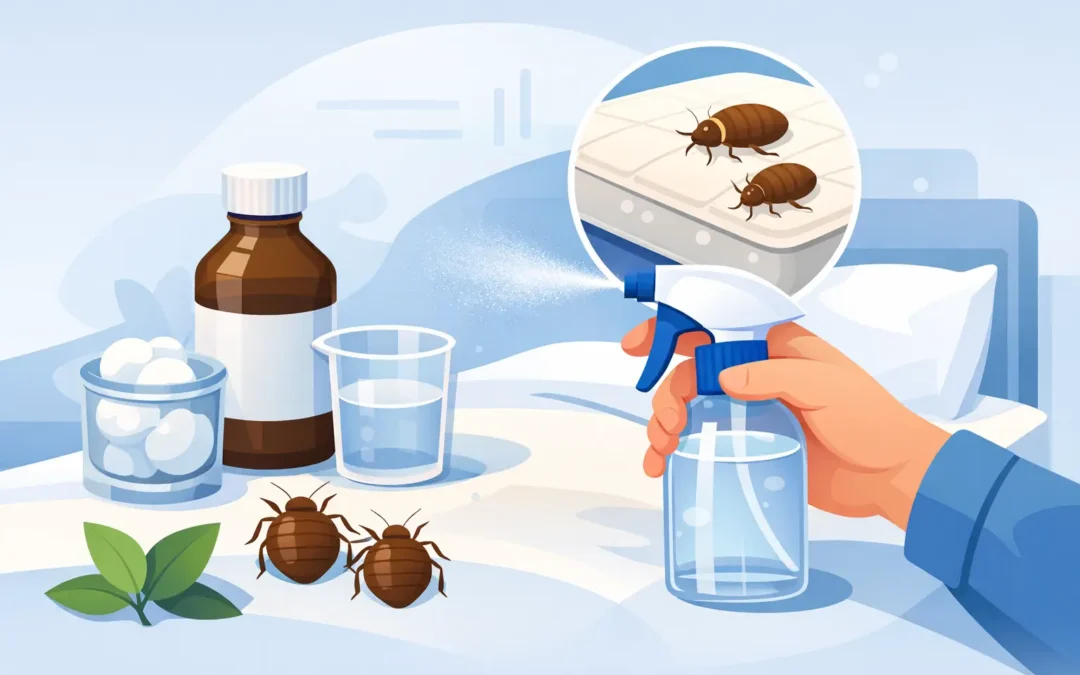
If you are searching for how to make bed bug spray with alcohol, you are probably dealing with the worst part of a bed bug problem – seeing live bugs and wanting something you can use right now. I get the appeal. Alcohol is easy to find, cheap, and it can kill bed bugs on contact. But there is a big difference between a quick contact kill and an actual bed bug treatment plan.
That distinction matters. Alcohol spray can help in limited situations, but it is not a complete fix, and if you lean on it too hard, you can lose time while the infestation spreads. The right way to use it is as a spot tool, not as your whole program.
How to make bed bug spray with alcohol
The simplest version is plain isopropyl alcohol in a clean spray bottle. Most people use 70% or 91% isopropyl alcohol because that is what is commonly sold in stores. You do not need to mix in essential oils, dish soap, vinegar, or other add-ons. Those ingredients do not turn alcohol into a better bed bug product, and they can create residue, odors, or false confidence.
Pour the alcohol directly into a labeled spray bottle that produces a narrow, controlled spray. Do not use a bottle that previously held bleach, ammonia, or any other cleaner. Chemical contamination is not something you want near bedding, upholstered furniture, or your skin.
Once the bottle is filled, label it clearly and keep it away from children, pets, ignition sources, and high heat. Alcohol is flammable. That is not a minor warning. Spraying it around outlets, lamps, baseboard heaters, candles, cigarettes, or anything that can spark is a real safety problem.
What alcohol spray actually does to bed bugs
Alcohol can kill bed bugs it directly wets. That is the key phrase – directly wets. If you spray a live bed bug and the alcohol makes solid contact with its body, you may kill it. The same can be true for some exposed nymphs and some eggs if they are directly saturated.
But bed bugs are good at staying hidden. They tuck into seams, screw holes, furniture joints, under staples, behind headboards, inside box spring cavities, and along edges where a casual spray never reaches. If the spray does not hit them, it does nothing. It has no lasting residual effect once it dries.
That is why alcohol spray often feels like it is working at first. You see a few bugs, spray them, and they die. Meanwhile, dozens more remain hidden in protected harborage areas. A few days later, you are still getting bitten.
When alcohol spray makes sense
Alcohol has a place, but it is a narrow one. If you expose a live bed bug during inspection, during disassembly of a bed, or while handling infested items, a quick direct spray can stop that individual bug from escaping. That is useful.
It can also help during cleanup when you are removing heavily infested clutter or opening up seams and folds where visible bugs are present. In those cases, the alcohol is acting like a contact kill tool, not a stand-alone treatment.
Where people get into trouble is using it like a room spray, mattress fog, or daily preventive mist. That approach wastes time, increases fire risk, and usually misses the bugs that matter most – the ones hidden deep in harborages and still laying eggs.
Where not to spray alcohol
Do not spray alcohol on or near outlets, power strips, electronics, lamps, routers, charging cords, or appliances. Do not soak mattresses, couches, recliners, carpet, curtains, or pet areas. Even if a surface seems dry later, the vapors and fire risk are the issue while you are applying it.
You also do not want to spray your skin, your clothes while wearing them, or bedding that is going right back into use before it is fully dry and aired out. If you are working around a sleeping area, think safety first. A bed bug problem is stressful, but not as stressful as causing a preventable fire.
If you use it, use it with control
A professional mindset helps here. Use alcohol only during inspection or handling, and only in small amounts aimed at visible bugs. You are not trying to soak a room. You are trying to stop a bug you can actually see.
Wear gloves if you are handling infested items. Ventilate the room. Turn off ignition sources before spraying. Let treated surfaces dry completely before restoring power to nearby devices or letting anyone lie on treated fabric surfaces.
A lot of DIY bed bug mistakes come from overapplying the wrong thing. More spray does not mean better control. With alcohol, more often just means more hazard.
Why alcohol alone will not solve a bed bug infestation
Bed bug control is about reaching hidden harborages, breaking the life cycle, and repeating treatment on the right schedule. Alcohol does none of that well by itself. It does not leave behind a residual deposit to keep killing bugs after application. It does not penetrate many of the places bed bugs live. And it does not replace preparation.
Preparation is where most self-treatment succeeds or fails. If the bed is still touching the wall, clutter is still piled under it, linens are not being bagged and dried correctly, and the headboard has never been inspected, spraying alcohol around the room is just activity. It is not a plan.
That is one reason homeowners get stuck in a cycle of bites, panic spraying, and temporary relief. They are treating sightings instead of treating the infestation.
What to do instead of relying on alcohol
If you want results, build a complete process. Start by confirming where the bugs are actually harboring. Inspect mattress seams, box spring edges, bed frames, headboards, nearby furniture, baseboards near the bed, and any cracks or joints within typical bed bug travel distance.
Next, reduce hiding places. Bag loose items. Launder and dry fabrics on the proper heat settings. Empty and inspect nightstands and nearby furniture. Pull the bed slightly away from walls if needed and stop bedding from draping onto the floor.
Then use products and methods that are designed for bed bug control, including tools that provide residual activity where appropriate and can be applied to cracks, crevices, joints, and other hiding spots according to label directions. That is how you move from killing the bug you see to killing the bugs you do not see yet.
Physical methods matter too. Vacuuming visible bugs and debris from seams and crevices helps. Steam can be useful when applied correctly to suitable surfaces. Encasements can protect mattresses and box springs as part of a broader system. None of those steps is magic on its own, but together they are far more effective than alcohol spray by itself.
A realistic answer to how to make bed bug spray with alcohol
If you still want the direct answer to how to make bed bug spray with alcohol, here it is: put plain isopropyl alcohol in a clean, clearly labeled spray bottle and use it only as a limited contact killer for visible bed bugs during inspection or handling. That is the honest version.
The dishonest version is telling people it is a full DIY cure. It is not. If you have one stray hitchhiker and you catch it out in the open, alcohol might be enough for that moment. If you have an established infestation in a bed, sofa, or bedroom setup, alcohol is not the engine of the solution.
This is where a lot of internet advice goes sideways. It gives people a simple trick when what they really need is a treatment sequence. Bed bugs are hard to eliminate because they hide well, reproduce steadily, and survive amateur shortcuts.
The trade-off most people miss
Alcohol is cheap and fast. A real bed bug process takes more work. That is the trade-off.
The problem is that the cheap, fast option often costs more in the long run because it delays effective control. Every week you spend relying on contact sprays alone is another week for hidden bugs to feed, molt, and expand into nearby furniture or rooms. If you are in an apartment, delay can also increase the chance of spread beyond your unit.
That does not mean you need to panic or spend thousands on service. It means you need to be honest about what each tool can and cannot do. At Butchies Bed Bug Bureau, that is the whole point of teaching DIY treatment the professional way instead of guessing from random home-remedy advice.
If alcohol is all you have tonight, use it carefully on visible bugs and call it what it is – a temporary contact tool. Then get serious about inspection, preparation, and a treatment plan that actually reaches the infestation where it lives.
The best next step is not spraying more. It is slowing down long enough to treat the problem on purpose.
Recent Comments