
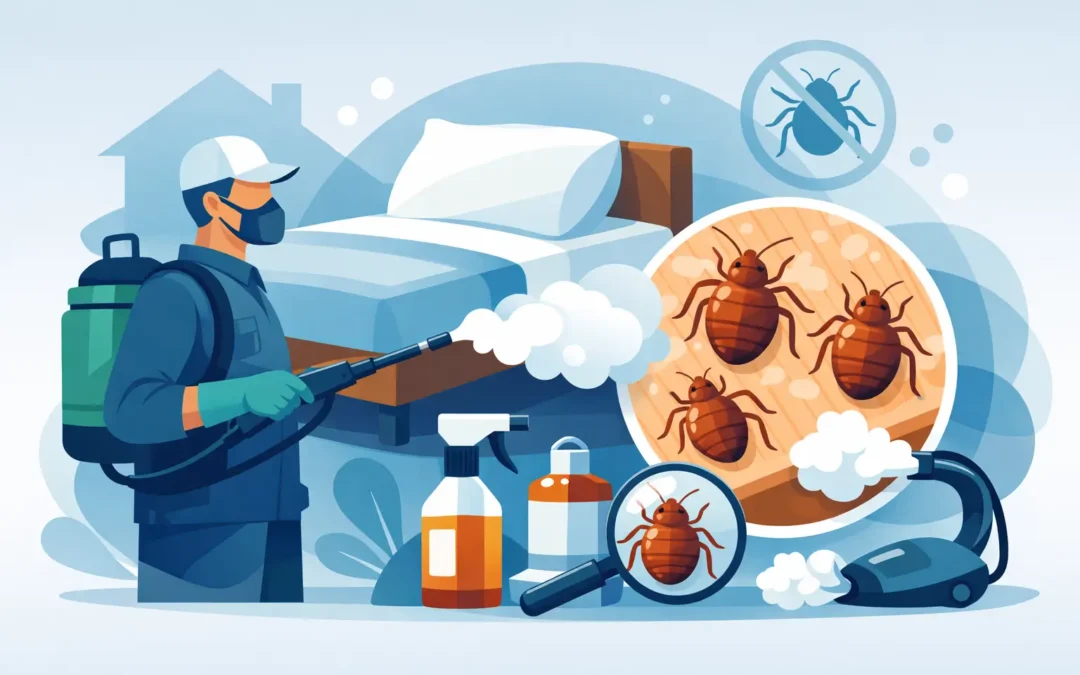
If you are staring at bites, spotting stains on the mattress, or finding bugs along a bed frame, the question gets very practical fast: what do exterminators use for bed bugs? The short answer is not one magic spray. A real bed bug treatment is usually a system that combines inspection, preparation, targeted insecticides, dusts, steam or heat, follow-up visits, and a lot of attention to hiding spots.
That matters because bed bugs are good at surviving weak treatments. If you only hit the places you can see, you usually leave live bugs and eggs tucked into cracks, furniture joints, baseboards, and clutter. Professionals know that product choice matters, but method matters just as much.
What exterminators use for bed bugs in the real world
Most licensed pest control companies use a mix of tools instead of relying on a single product. The exact combination depends on how bad the infestation is, the layout of the home, whether there are kids or pets, and whether the company is doing chemical treatment, heat treatment, or a hybrid approach.
In many cases, exterminators start with a detailed inspection. They look at mattress seams, box springs, headboards, bed frames, couches, recliners, nightstands, wall voids, baseboards, and any place close to where people rest. Bed bugs like tight hiding spots, and the treatment plan is built around those harborages.
Once they confirm activity, professionals often use residual insecticides, desiccant dusts, contact kill products, steam, encasements, monitors, and vacuums. Some companies also use whole-room or whole-structure heat. Each tool does a different job. That is why good bed bug work is more like a coordinated process than a single application.
The main products exterminators use for bed bugs
Residual insecticides
Residual products are one of the main answers to what exterminators use for bed bugs. These are applied to cracks, crevices, bed frames, furniture joints, baseboards, and other hiding places where bugs travel or rest. The goal is to leave behind a deposit that keeps working after it dries.
A professional may use liquid concentrates labeled specifically for bed bugs. Depending on the active ingredient, those products may affect the bug’s nervous system or work in other ways. The catch is resistance. In some areas, bed bugs do not respond well to certain insecticide classes, especially when those products are overused. That is one reason pros rotate products or combine them with non-chemical tools.
Residual sprays are useful, but they are not for every surface. A competent tech does not just soak mattresses, clothing, or random living areas. Label directions matter. So does placement.
Dusts
Dust is a big part of many professional treatments, and homeowners often underestimate how useful it is. Exterminators commonly use desiccant dusts in wall voids, outlet areas, cracks, furniture voids, and other protected spaces where a liquid spray is not ideal.
These dusts work by damaging the insect’s outer protective layer, which causes dehydration. That makes them valuable because resistance is less of an issue than with many traditional insecticides. They also tend to last a long time when left undisturbed.
But more is not better. A light, almost invisible application is the professional standard. Heavy piles of dust can actually be less effective and create unnecessary exposure problems.
Contact kill products
Some exterminators use contact sprays such as alcohol-free labeled products or aerosol formulations to kill exposed bed bugs during treatment. These can help knock down visible bugs quickly, especially during inspection and dismantling.
The limitation is simple: contact killers only work if they hit the bug. They do not solve the whole infestation by themselves. If a treatment relies too heavily on quick kill products and not enough on residuals, dusts, steam, or follow-up, the problem often comes right back.
Steam
Steam is one of the most useful non-chemical tools in bed bug work. Professionals use commercial-grade steamers to treat mattress seams, tufts, upholstered furniture, bed frames, and other areas where bugs and eggs may be hiding near the surface.
Heat from steam can kill bed bugs and eggs on contact, which is a major advantage because eggs are often harder to eliminate with insecticides alone. The downside is that steam has no residual effect. Once the area cools, there is nothing left behind to kill bugs that were missed.
Steam also takes skill. Too much moisture can damage furniture or create mold issues. Too little heat or moving too fast reduces effectiveness.
Vacuums
A vacuum is not a complete treatment, but exterminators use it as a preparation and reduction tool. Vacuuming removes live bugs, cast skins, debris, and some eggs from accessible surfaces. This can lower the population before chemical or steam treatment starts.
Again, technique matters. A fast once-over is not enough. The operator has to work seams, edges, crevices, and joints carefully, then handle the vacuum contents in a way that does not spread bugs back into the home.
Mattress and box spring encasements
Professionals often recommend or install bed bug-proof encasements on mattresses and box springs. These do not kill an infestation throughout the room, but they help by trapping bugs inside, removing deep harborage areas, and making future inspections much easier.
Encasements are especially helpful as part of a larger plan. On their own, they are not a cure.
Do exterminators use heat for bed bugs?
Yes, some do. Heat treatment is one of the best-known professional options. In a heat job, technicians raise the temperature in a room or structure to a level lethal to bed bugs and hold it long enough to kill all life stages, including eggs.
Heat can work very well when it is set up and monitored correctly. It penetrates many items that sprays cannot reach easily, and it can produce fast results. But it is not automatic. Rooms have cold spots. Clutter can insulate bugs. Some items must be removed or handled carefully because of heat sensitivity.
Also, heat jobs are usually more expensive than conventional treatment. And even after heat, some companies still apply residual products in strategic areas to protect against survivors or reintroduction. So if you are asking what do exterminators use for bed bugs, the answer may be heat, but usually not heat alone without planning and verification.
Why preparation matters as much as the products
This is where many DIY attempts fail. People focus on buying a spray and skip the prep. Professionals know the treatment is only as good as access to the bugs.
If beds are jammed against walls, clothes are scattered, drawers are overpacked, and furniture is never opened up, bed bugs keep plenty of hiding places. A proper job often includes laundering and drying infested fabrics on high heat, reducing clutter, emptying or organizing certain furniture, pulling beds apart, and making sleeping areas accessible for treatment.
Preparation is not busywork. It is part of the treatment itself. Even the best product cannot reach a bug sealed behind layers of disorder.
Why exterminators come back more than once
Bed bug jobs often require multiple visits. That does not always mean the first treatment failed. Eggs can hatch after the initial service. Some bugs may stay hidden during the first round. Follow-up inspections let the technician check activity, retreat problem areas, and adjust the plan.
That is one of the biggest differences between amateur treatment and professional process. Pros expect to verify results. Bed bugs are persistent, and good control is based on inspection, treatment, and reinspection.
What exterminators usually do not rely on
Most legitimate pros do not rely on bug bombs or total-release foggers for bed bugs. Those products tend to miss the hiding places that matter and can scatter bugs deeper into walls or adjacent rooms. They also create unnecessary exposure risk when misused.
They also do not count on essential oils, random internet mixtures, or broad overapplication of store-bought sprays. Some over-the-counter products are labeled for bed bugs, but label approval is not the same thing as a complete treatment strategy.
Can you use the same methods yourself?
In many cases, yes, but only if you treat it like a professional process instead of a panic purchase. The reason so many people ask what do exterminators use for bed bugs is that they want the inside track on what actually works. That is the right instinct.
The important part is understanding that professional-grade results come from the combination of inspection, product selection, placement, safety, and follow-up. If you skip any of those pieces, the products alone may disappoint you.
That is also why educational guidance can matter so much. A homeowner can often do a solid job when they understand where to treat, where not to treat, how to prep, how to rotate methods, and how to judge whether the infestation is dropping or simply moving.
At Butchies Bed Bug Bureau, that is the gap we focus on – translating real pest control process into something a homeowner can carry out responsibly.
The honest answer to what exterminators use for bed bugs is this: they use a system. Sprays, dusts, steam, vacuuming, encasements, heat, monitoring, and repeat inspections all have a place. If you think like a technician instead of a shopper, you give yourself a much better shot at getting bed bugs out for good.
Recent Comments